|
To write is to confront one’s demons, look them in the face and live to write about them.— Gloria Anzaldúa
it is only once in a while that you see someone whose electricity and presence matches yours at that moment.
— Charles Bukowski Love recognizes no barriers. It jumps hurdles, leaps fences, penetrates walls to arrive at its destination full of hope.
— Maya Angelou I’ve learned that people will forget what you said, people will forget what you did, but people will never forget how you made them feel.
— Maya Angelou Life is pure adventure, and the sooner we realize that, the quicker we will be able to treat life as art. — Maya Angelou
In “Puta Madre” by Yannick Fournie, the artwork features a striking portrait of a figure wearing a traditional lucha libre mask, which is a significant symbol in Mexican wrestling culture. The mask is vividly painted in shades of blue and white, contrasting against a bold pink and purple background that creates a dramatic and energetic atmosphere.
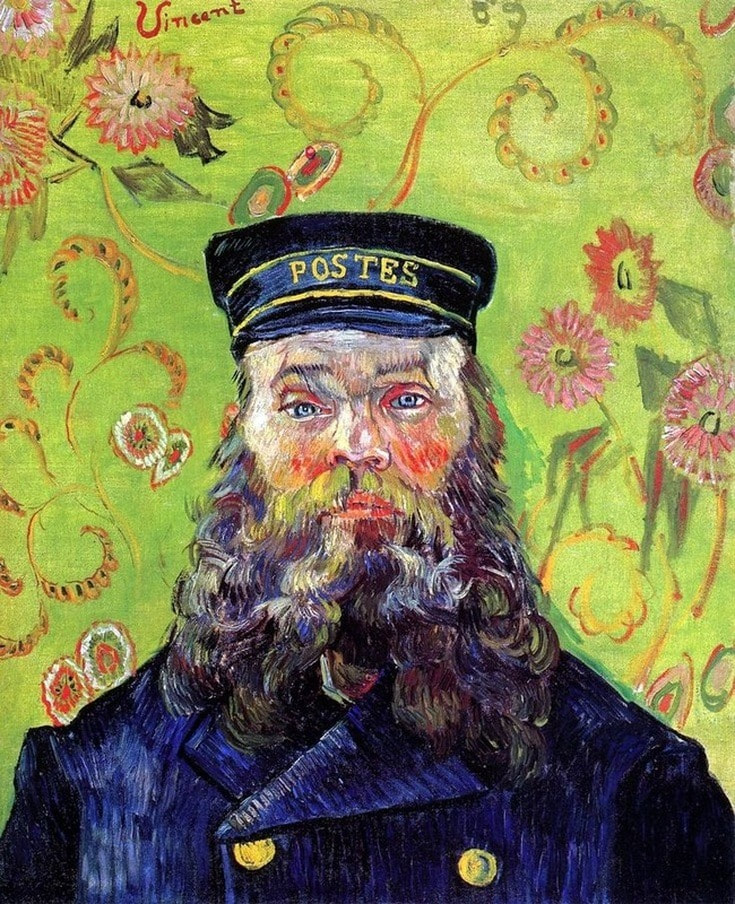
The use of color is powerful, with the bright hues highlighting the contours of the mask and the figure’s face, while the background seems to pulsate with emotion. The figure’s expression is serious and contemplative, inviting viewers to ponder the duality of identity in the world of lucha libre—where wrestlers often adopt larger-than-life personas while hiding their true selves behind masks. The brushwork is fluid and dynamic, contributing to the overall sense of movement and energy in the painting. The drips and runs of paint add an element of rawness, emphasizing the emotional weight of the subject. Overall, “Puta Madre” captures the vibrant spirit of lucha libre while also exploring themes of identity, performance, and the complex nature of heroism and villainy in the wrestling world and in life in general. It invites viewers to reflect on the stories and personalities behind the masks, making it a compelling piece of art. The portrait of Joseph Roulin is a vibrant depiction of Van Gogh's close friend, a postal worker. Van Gogh's characteristic bold strokes and vivid colors bring to life Roulin's striking features, especially his blue uniform and the cap inscribed with "Postes". His intense gaze and the lush, floral background create a contrast between the subject and the setting. This piece is an excellent example of how Van Gogh could infuse portraits with emotion and depth, capturing not just a likeness, but the essence of the person. Roulin's dignified presence is immortalized against the playful backdrop, showing the warmth and respect Van Gogh had for his friend.
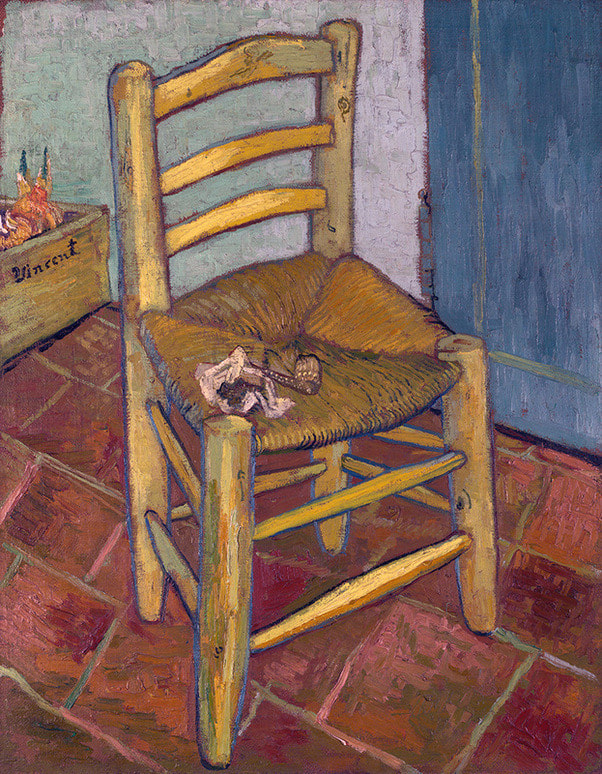
"Van Gogh's Chair" presents a simple yet deeply personal subject. The lone, yellow chair sits on a red-tiled floor, with a straw seat that holds a pipe and tobacco pouch. The painting is rich with texture, from the grain of the wood to the weave of the straw. The chair is not just a piece of furniture but a portrait without a person. It evokes a sense of presence and absence, inviting reflection on the artist who once occupied it. The choice of colors and perspective gives the scene a humble yet intimate quality, like a quiet moment paused in time.
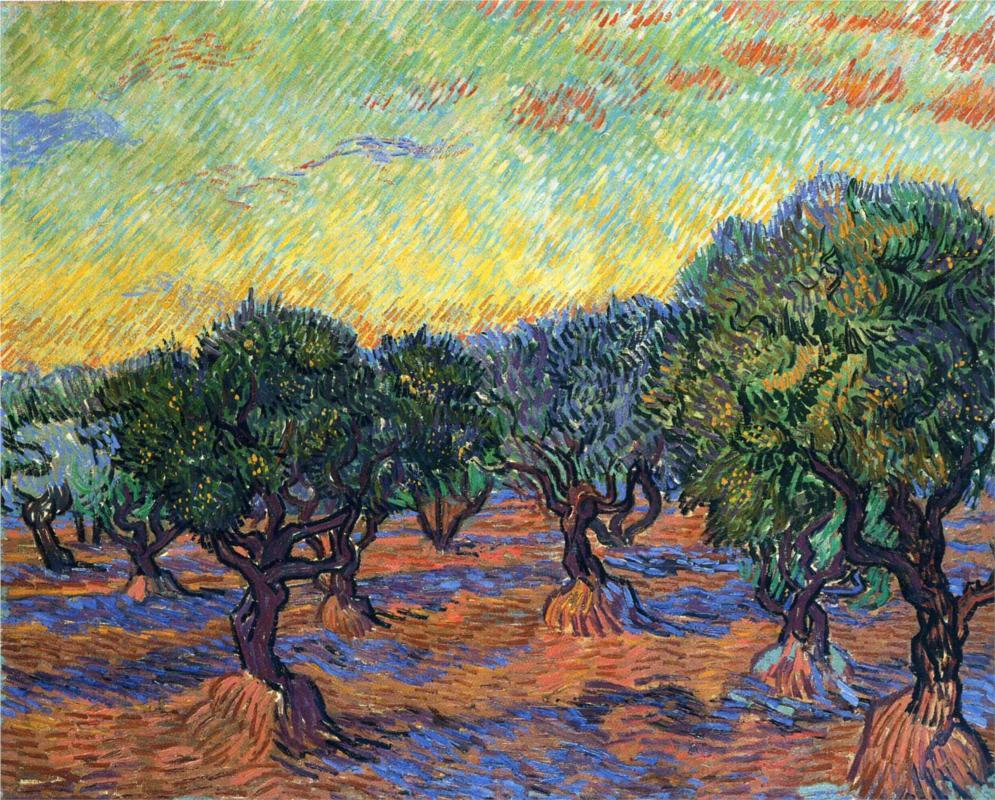
In "Olive Grove with Orange Sky," Van Gogh captures the twisting forms of olive trees under a vivid sky. The strokes of yellow, orange, and green create a dynamic, almost vibrating effect, as if the landscape itself is full of energy. The way he paints the earth and sky in such bold colors makes it feel like we're seeing this grove not just with our eyes, but with our emotions. This painting is a testament to Van Gogh's ability to express the soul of a scene, inviting us to feel the warmth of the sun and the life force within the trees.
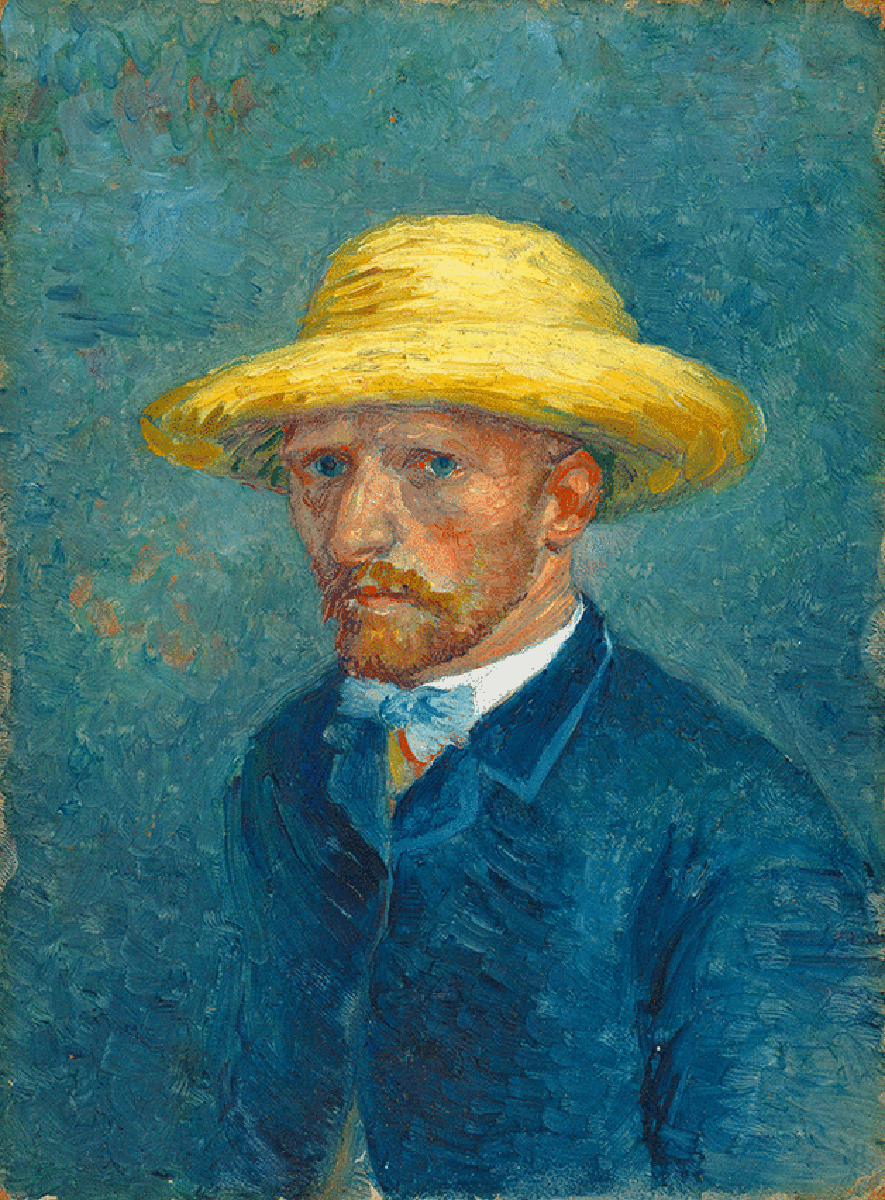
This portrait, often thought to be of Theo van Gogh, Vincent's brother, exudes a sense of quiet strength and intimacy. The subject's gaze is direct and thoughtful, his straw hat a bright spot of yellow that draws the eye. Vincent's signature expressive brushwork is evident in the vibrant strokes that define the contours of the face and clothing. The blues and greens of the background contrast with the warmth of his complexion, creating a sense of depth. This piece reflects the deep connection between the artist and the subject, encapsulating a moment of peaceful reflection.
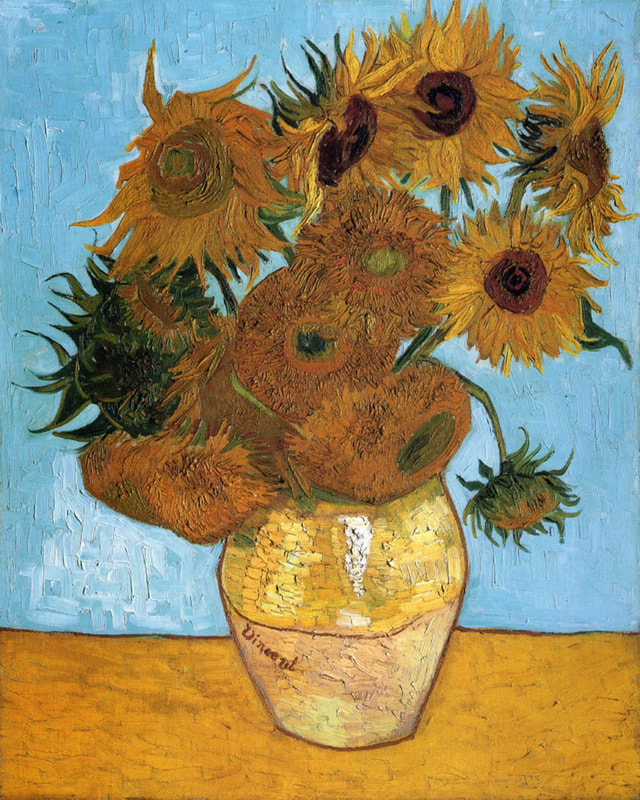
In "Vase with Twelve Sunflowers," Van Gogh captures the sunflowers' vibrant spirit with a sense of immediacy. The rich yellows and browns against the stark blue background create a stunning contrast that's almost solar in its intensity. The textured brushstrokes give each flower a dynamic, almost sculptural quality. This piece radiates warmth and exudes the same energy you feel on a bright, sunny day. Van Gogh's ability to convey the essence of his subjects is truly remarkable, turning a simple vase of flowers into a celebration of light and life.
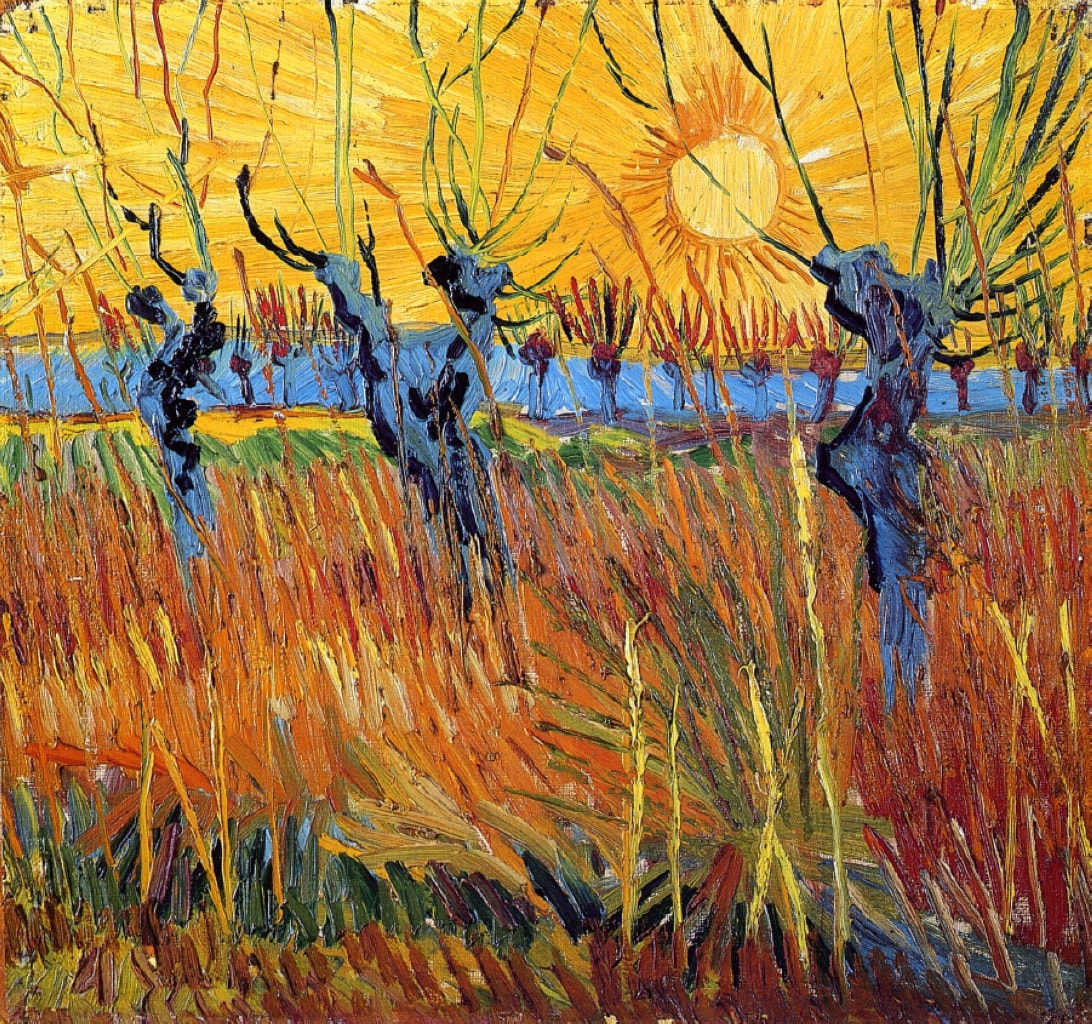
In "Pollard Willows and Setting Sun," Van Gogh gives us a bright sunset with a big yellow sun that fills the sky. The trees are dark and twisty against the colorful background, and the field has many shades of orange, yellow, and green. Everything is painted with thick, wild brush strokes that make the scene feel full of energy. It's like Van Gogh is showing us the sun's power to light up and change everything it touches, making even a normal field look amazing as the day ends.
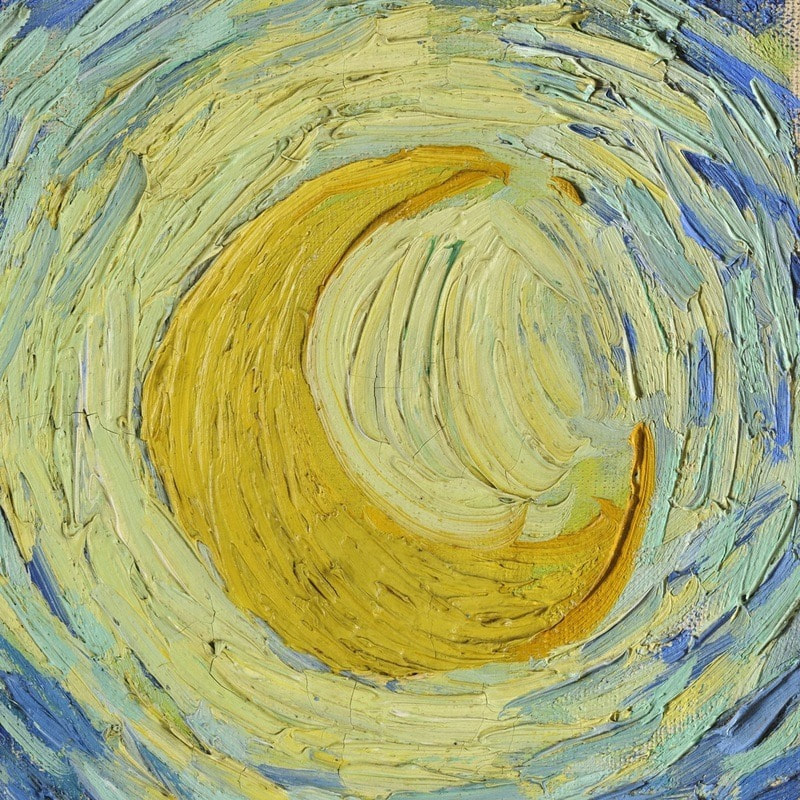
This detail from "Starry Night" showcases Van Gogh's unique way of painting the night sky. The moon and stars are alive with swirls of yellow and white, surrounded by waves of blue. The thick paint and swirling lines create a dreamlike feeling, as if the sky is moving. This painting makes the night seem magical, full of light and motion. It's like Van Gogh is telling us that there's more to the night than just darkness; there's beauty and wonder too.
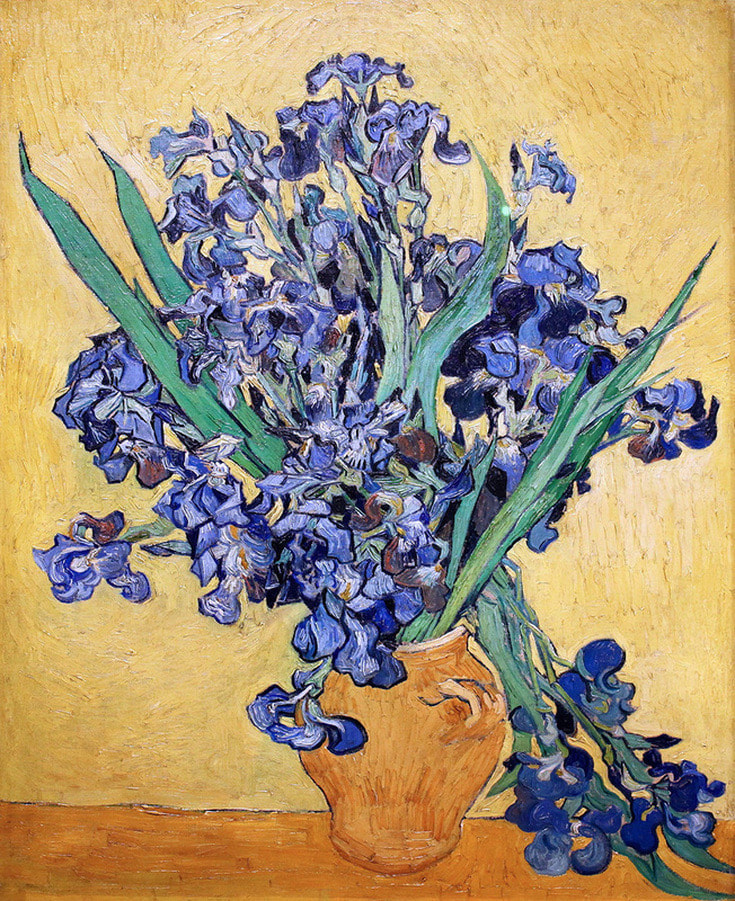
In "Still Life with Irises," we see a bunch of deep blue and purple irises standing tall and wild in a simple vase. The background is a warm yellow that makes the deep blues and purples of the flowers really stand out. Van Gogh uses his thick brush strokes to give life and texture to the petals and leaves. It's like he's celebrating the natural beauty of these flowers, showing us how even in a vase, they have a life and energy of their own.
This image titled "Japanese Vase with Roses and Anemones" shows Van Gogh's love for color and texture. He fills the canvas with thick paint, creating a bouquet that almost seems to burst out of the vase. The colors are joyful and intense, with reds, yellows, and whites standing out against the soft beige background. It's a lush, vibrant mix that feels alive and inviting. Van Gogh's passion for the beauty of flowers is evident, capturing not just their look but the feeling they give of a bright, joyful day.
This detail view of "Butterflies and Poppies" showcases a bright red poppy with a butterfly resting on it. Van Gogh's thick, textured brushwork brings the scene to life, emphasizing the poppy's vivid color and the delicate nature of the butterfly. The contrast between the red of the flower and the greens of the background makes the image pop, almost like you can feel the sun and the gentle touch of the butterfly's wings. It's a snapshot of nature's fleeting moments that Van Gogh so beautifully preserved.
This close-up view of "Almond Blossom" captures the delicate beauty of spring. Van Gogh paints the blossoming almond branches against a clear, blue sky. Each brush stroke adds life to the white flowers, with hints of green and a touch of red. The way the branches reach out across the canvas makes it feel like spring is spreading right before our eyes. This piece is full of hope and new beginnings. It's as if Van Gogh wants us to feel the fresh start that nature gets every year with the arrival of spring.
Jay Ryan is a highly regarded figure in the world of screen printing, known for his charmingly idiosyncratic posters that blend a sense of whimsy with a minimalist aesthetic. His work is a refreshing blend of simplicity and complexity, where animals and objects are often personified, telling stories that evoke a spectrum of emotions from the viewer.
Ryan's unique style is characterized by a hand-drawn, almost child-like innocence paired with mature, sophisticated themes. His color palettes are deliberate and restrained, yet they convey a rich narrative within each piece. His ability to distill complex emotions and situations into singular, often humorous images has garnered him a dedicated following. A significant part of his charm comes from his playful approach to concert posters, which have been sought after by bands and collectors alike. Beyond the music scene, his art extends into fine art prints and book illustrations, each piece marked by his signature use of animals in unexpected, sometimes anthropomorphic roles. What makes Jay Ryan's work particularly engaging is the way it captures the imagination, inviting viewers into a world that is both fantastical and deeply relatable. His art is not just seen; it is experienced, often leaving a lingering smile or a pensive thought. Ryan has a gift for turning the mundane into the magical, pulling us into his vibrant world where bears might ponder the stars, and birds carry on understated conversations with the moon. "The Future of Statues" (1937) by Rene Magritte is a classic example of his work, where he challenges viewers to rethink the boundaries between reality and imagination. With the sky painted on the face, Magritte plays with the idea of the invisible within the visible, suggesting a world of possibilities that lies within the human mind. It's a fascinating piece that invites us to look beyond the surface and explore the depth of our own perceptions.
|
ART BLOG
|